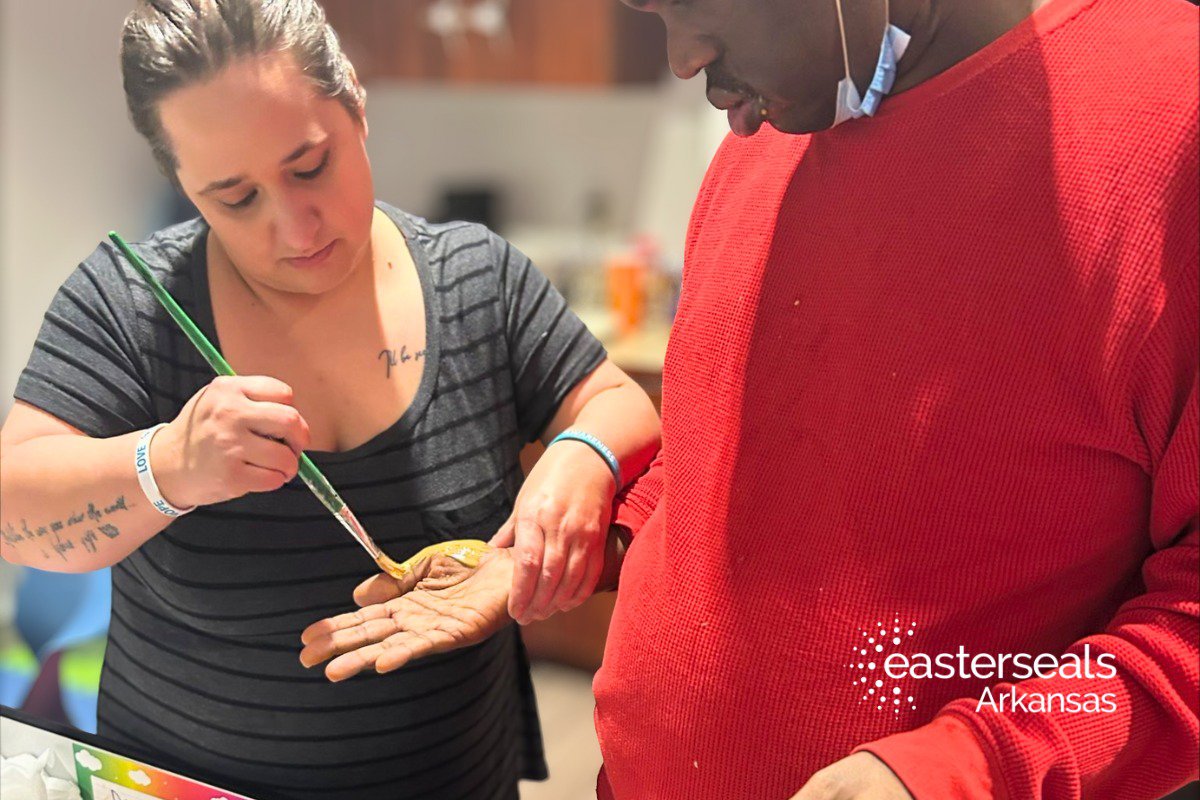
Personal care is never “just” bathing, meals, or getting through a schedule. When you support someone with Down syndrome or another intellectual or developmental disability (I/DD), you already know this: care works best when it protects dignity, builds trust, and honors the whole person. Compassionate personal care today isn’t about doing more tasks. It’s about giving the right support, the right way. You want the person you love to feel safe, respected, and included. And it’s also about making sure you, the caregiver, aren’t carrying everything alone.
A dignity-first framework matches what many Arkansas families are asking for right now. Easterseals Arkansas can help support individuals with disabilities and the people who care for them across childhood, school years, and adulthood.
Key Takeaways:
- Compassionate personal care centers focus on dignity, consent, and emotional safety, not just task completion.
- People with I/DD thrive with predictable routines that still protect choice and independence.
- “Whole-person care” includes communication, sensory needs, friendships, and community life.
- Support works best when caregivers understand the person’s goals, preferences, and triggers.
- Families do better when they have coordinated services (therapy, education, adult supports) instead of fragmented help.
- Easterseals Arkansas supports children and adults with disabilities through programs like Developmental Preschool, Pediatric Outpatient Therapy, ABA, Easterseals Academy, and adult services, including home and community-based supports.
What Does Compassionate Personal Care Mean Today for People With I/DD?
Compassionate personal care means supporting daily needs in a way that protects autonomy, reduces stress, and honors the person’s full identity, rather than just their diagnosis.
For someone with Down syndrome, autism, or another developmental disability, “personal care” can include hygiene, dressing, meals, mobility, routines, and safety awareness. But compassionate care adds the missing essentials: respect, patience, and partnership.
How Has Compassionate Personal Care Evolved Beyond “Helping With Tasks”?
It has shifted from “doing for” to “supporting with.”
That means caregivers:
- Ask before helping (and wait for a response, even if it’s nonverbal)
- Offer choices that are real (not rushed or scripted)
- Build routines around the person’s comfort and communication style
- Treat privacy like a right, not a privilege (knocking, explaining steps, using coverings)
This matters because people with I/DD can experience more dependence in certain areas while still having strong preferences, pride, and a deep need for control over their own body and space.
What Part Does Dignity Play in Compassionate Personal Care?
Dignity is protective. It reduces anxiety, lowers resistance, and builds cooperation over time.
When dignity is missing, caregivers often see more burnout and more “behaviors.” When dignity is present, care feels calmer, safer, and more sustainable for everyone.
How Do Routines and Choice Work Side-By-Side in Dignity-First Care?
Predictability helps many people with I/DD feel safe, but compassionate personal care ensures routines don’t become rigid control.
A strong care routine answers: “What helps this person feel steady?”
A dignity-first routine also asks: “Where can this person lead?”
Examples of choices that still keep structure:
- “Do you want a shower before breakfast or after?”
- “Blue shirt or gray shirt?”
- “Walk outside first, or music first?”
- “Do you want help brushing teeth, or do you want to start, and I’ll finish?”
Even small choices can reduce power struggles and support self-confidence.
What Should a Personalized Support Plan Include for Someone With Developmental Disabilities?
A personalized plan is more than a list of tasks. It’s a living guide to helping someone succeed at home, at school, at work, and in the community.
A strong support plan often includes:
- Communication needs (verbal, AAC, visuals, gestures)
- Sensory preferences and triggers (noise, touch, lighting, crowds)
- Mobility, feeding, or safety needs
- Determining “independence” looks like for this person right now
- What the person enjoys (music, routines, interests, calming activities)
- Figuring out what causes distress, and what helps de-escalate
- Family priorities (morning routines, school readiness, community participation)
Easterseals Arkansas builds services around individualized needs across the lifespan, from early childhood through adulthood.
What Supports Exist in Arkansas When Care Needs Include Therapy or School Services?
For many families, compassionate care includes access to specialized therapies and inclusive education, not just in-home help.
Easterseals Arkansas offers multiple programs that support children with disabilities (and their caregivers) in coordinated, practical ways:
| Easterseals Services | Details |
|---|---|
| Developmental Preschool | Inclusive early education with supports |
| Pediatric Outpatient Therapy | Physical, occupational, and speech-language therapy from newborn to age 18 |
| Applied Behavior Analysis (ABA) | One-to-one support integrated into daily activities |
| Easterseals Academy | Inclusive K-12 with small class sizes and therapy support |
| In-Home Waiver Services | Children get the care they deserve in the most comfortable setting, eliminating the need for institutionalization |
These services matter because caregiver stress often rises when families have to coordinate multiple systems alone. When therapy, education, and family support connect, care becomes clearer, and less exhausting.
What Does “Whole-Person Support” Look Like Across Adulthood?
As children with I/DD grow up, compassionate personal care evolves. Goals often shift toward independence, meaningful routines, relationships, and community life.
Whole-person adult support may focus on:
- Daily living skills (hygiene, cooking, transportation readiness)
- Communication and self-advocacy
- Social connection and community participation
- Supported employment or vocational preparation
- Stable housing supports (when appropriate)
Easterseals Arkansas provides adult services designed to support independence and community living, including home and community-based supports and adult programs.
Why is Caregiver Matching and Consistency So Important in I/DD Care?
A strong caregiver-client match can reduce anxiety, improve cooperation, and build trust, especially when personal care is involved.
Consistency is not a luxury. For many people with developmental disabilities, it’s the foundation for safety and emotional regulation.
A good match considers:
- Communication style (direct, gentle, playful, quiet)
- Pace (fast-moving vs. slow-and-steady)
- Sensory awareness (voice volume, touch preferences, environment)
- Shared interests (music, sports, routines, hobbies)
- Respect for boundaries and privacy
When the match works, care becomes more natural and less draining for families.
How Can Caregivers Protect Dignity While Also Keeping Someone Safe?
Safety and dignity can coexist when caregivers use “least intrusive support” and clear, respectful communication.
Practical dignity-first safety strategies include:
- Explain before you help: “I’m going to turn the water on now.”
- Use step-by-step prompting: give the smallest amount of help needed
- Offer a reset instead of a fight: pause, breathe, try again in 5 minutes
- Protect privacy: towels, closed doors, and respectful language during hygiene
- Build predictable transitions: timers, visual schedules, “first/then” language
When safety is the concern (fall risk, wandering risk, choking risk), compassionate care means adapting the environment and routine, without shaming or forcing.
What Should Families Look for in a Trusted Provider in Arkansas?
Families deserve providers who treat them like partners and treat their loved one like a whole person.
When you’re evaluating support, look for:
- Clear communication and transparent next steps
- Training and consistency
- Respectful language about disability (person-first, strengths-based)
- Willingness to learn the person’s preferences, not just “manage” them
- Services that can grow with your family over time
If you’re exploring Easterseals Arkansas, you can start with their program options and locations across the state, then ask what services best match your situation.
Why Dignity-First Matters for Compassionate Personal Care
Caregiving today is complex. Families are juggling work, appointments, school needs, therapy goals, and long-term planning. And many caregivers are doing it while tired, stressed, and worried they’re “not doing enough.”
But dignity-first care isn’t about perfection. It’s about values you can return to every day:
- Respect
- Consent
- Patience
- Consistency
- Connection
- Community
At Easterseals Arkansas, the goal is to help people with disabilities live, learn, work, and play in their communities, while supporting families with programs that meet real-life needs across childhood and adulthood.
Compassionate Personal Care in Arkansas
Caring for a loved one with a disability can bring both rewarding moments and real challenges, and you don’t have to navigate it alone. Easterseals Arkansas is here to walk alongside your family with compassionate, professional support that helps individuals with disabilities live, learn, work, and play in their communities. If you’re looking for guidance, resources, or services tailored to your loved one’s needs, reach out to Easterseals today to start a conversation and take the next step with a team that truly understands.